✨ Don’t Miss Our Current Offers — Up to 20% Off!

Our Story
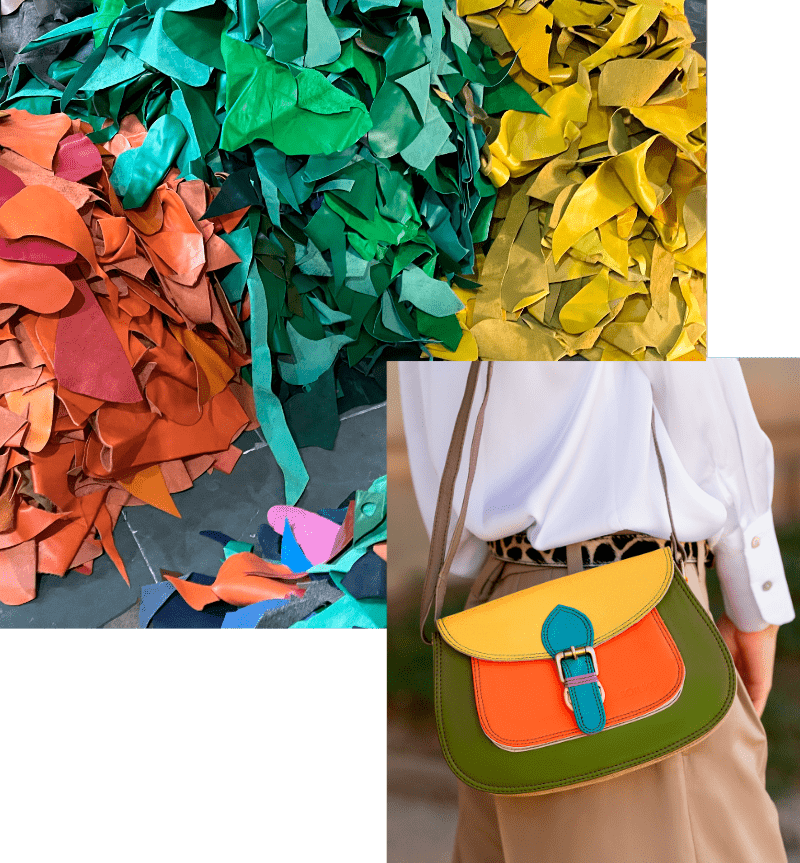
It has been estimated that more than 500K tonnes of leather are wasted every year. Traditional leather industry only uses the central part of the hide for their products, which results in 60% of the leather produced not being used and often ending up in landfills and rivers of our planet, creating a huge environmental problem.
Our journey began in 2017 as a result of observing these environmental challenges caused by the fashion industry. Soruka was born as part of the solution, offering sustainable fashion without compromising style or quality.
Inspired by the concept of circular fashion and motivated to be a zero waste company, we started to search for what could we do with the discarded leather to give it a new life, always to reduce waste and contribute to a more sustainable future.
The result: unique and timeless fashion accessories, designed in Barcelona and produced with recovered or recycled materials, promoting more conscious consumption.
It is an exciting challenge to use and transform useless materials into useful and unique creations while contributing to a better future.
Josep (Founder Soruka)
We want to be part of the change:

0 tonnes
of leather rescued each year
0 million
liters of water saved annually

0% of our
employees are women
0 fair jobs
provided by Soruka’s producers in India
We believe that conscious fashion is not only possible, but necessary and urgent. We want to contribute to a fairer fashion industry for the people who make our products, for those who wear them, and for the planet.
- Upcycling circularWe believe the most sustainable material is often the one that already exists. That is why we work with recovered leather that has already been produced but would otherwise go to waste, including post-industrial leather scraps, leftover materials and deadstock. Deadstock can include leather that companies can no longer use because of excess inventory, small remaining quantities, aesthetic requirements or previous-season collections. Instead of allowing these materials to become waste, we rescue them and give them a new purpose. Our artisans work with the shapes, colors and characteristics of the materials available, transforming these leftovers into useful and long-lasting accessories. We aim to use as much of every piece as possible, reducing waste and extending the life of materials that already exist. For us, circularity means rescuing, reusing and transforming what is already there rather than continuously demanding new resources.
- Living CraftBehind every Soruka piece there are people, skills and generations of craftsmanship. Our products are made in India in collaboration with small independent artisans and workshops. We work closely and directly with them, supporting local craftsmanship and helping preserve traditional leatherworking techniques and knowledge. Production is primarily handcrafted rather than based on automated mass production. Traditional techniques are combined with basic tools and machinery when required for specific processes such as cutting or sewing. But craftsmanship is not only about how a product is made. It is also about respecting the people who make it. Our production policy requires that all artisans involved in making Soruka products are adults over the age of 18. We do not accept child labour within our production chain, and the artisans we work with receive fair remuneration for their work. By maintaining direct and long-term relationships with the workshops and artisans who manufacture our products, we aim to keep our production chain closer, more transparent and more accountable. For us, sustainability must include both respect for materials and respect for people.
- UniquenessNo two Soruka pieces are exactly the same. Because we work with recovered leather scraps and deadstock rather than producing new materials specifically to achieve identical results, we embrace the colors, textures, prints and natural characteristics of the materials that are available. Our artisans select and combine these different pieces individually, meaning that variations are an inherent part of the way we create. This is why the product you receive may differ slightly in color combination, texture or print from the one shown in a photograph. These differences are not imperfections to be hidden — they are part of the story of the recovered materials and the handcrafted process behind each piece. In a fashion industry dominated by standardized, identical products, we choose a different approach: working with what already exists and allowing every creation to develop its own identity. One-of-a-kind materials. Handcrafted by people. No two pieces alike.